
The Spanish summer is what many people dream of: endless sun, azure skies and long, warm evenings. But that lovely warmth can be a challenge indoors — nobody wants to melt away in their own living room. Whether you work from home, dream of an undisturbed night's sleep or simply want to relax in comfort: these proven strategies will keep your Spanish home wonderfully cool. Some tips cost you nothing, others require a small investment that pays for itself many times over in comfort.
1. The magic of the night: smart ventilation
It may sound obvious, but timing is everything. Keep all windows and doors firmly shut during the day to keep the hot Spanish air out. As soon as the sun sets and temperatures drop, open windows on opposite sides of the house wide. This creates a wonderful natural draught — also known as night-flush ventilation. The cooler evening air flows through the house and refreshes everything. And don't forget: close everything again before the morning sun rises, trapping the night's coolness inside.
2. Shading: your first line of defence
One of the most effective and often overlooked tricks is simply keeping the sun out. Make sure curtains, blinds or roller shutters on the sunny side of the house are closed — especially south-facing windows, but also eastern ones in the morning and western ones in the afternoon. No fancy window dressing? No problem: even a white sheet hung up temporarily can work wonders against the worst of the heat.
3. Fans: more than just moving air
A fan doesn't cool the air, that's true. But it does create movement, and that movement helps your body cool down by evaporating sweat faster. Use them strategically: in the evening in front of an open window to draw cool air in, or in a cooler room to spread that air around. Personal favourite: a bowl of ice water in front of the fan — it creates a wonderfully cooling breeze. And did you know ceiling fans are most effective when spinning anti-clockwise? That way they push the air downwards for an optimal cooling effect.
4. Appliances off: less heat, more coolness
It's astonishing how much heat household appliances produce. Think of lamps, the oven, computers and even the washing machine. Switch them off as much as possible when not in use, and only run the oven or dishwasher in the cooler evening hours. Cook early in the morning or outside on the barbecue. And on really hot days, salads or cold soups are delicious, cooling alternatives.
5. Portable air conditioning: worth considering?
A portable air conditioner can offer real cooling by actively extracting heat from the air. But let's be honest: this comfort comes at a price. They use a lot of electricity — sometimes 20 times more than a fan — which can add up to several euros per day. If you're considering one, pay close attention to the size (matching the room) and make sure the exhaust hose is perfectly sealed at the window. And very important: unplug it when not in use to avoid standby consumption.
6. Evaporative cooler: the smart alternative
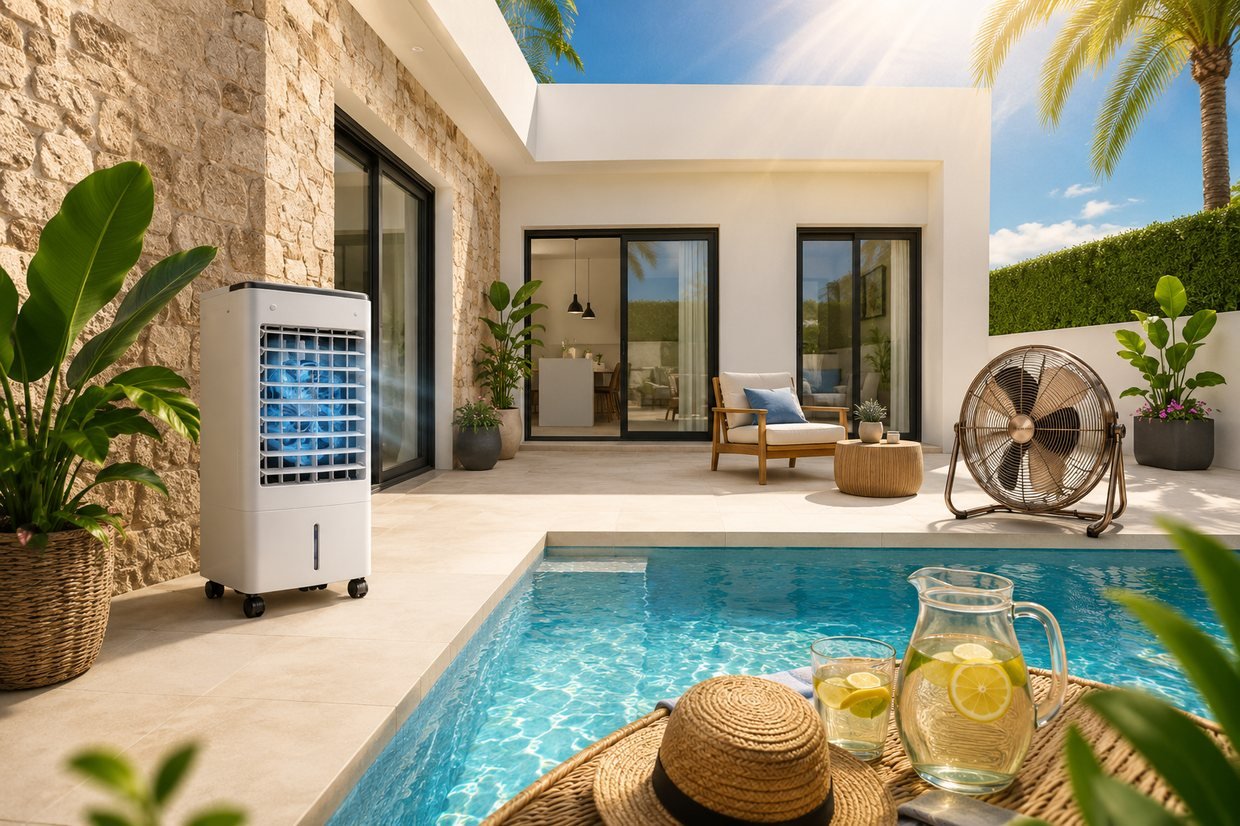
A cheaper and more energy-efficient alternative to a portable air conditioner is an evaporative air cooler. These devices blow air past cold water, creating a pleasantly cooling effect. They cost a little more than a fan, but are much cheaper to run than air conditioning. They also increase humidity, which is often experienced as pleasant in the dry Spanish climate. One thing to watch: ensure sufficient ventilation to prevent the house from becoming too humid.
7. Insulation: an investment for every season
Good insulation is one of the best investments you can make for your Spanish home. It works both ways: it keeps the heat in during winter, and out during summer. If you notice your house is too hot in summer and too cold in winter, it may be time for better roof, floor or cavity wall insulation. A well-insulated house provides a much more stable and comfortable indoor climate all year round — and helps lower your energy costs too.
8. Solar film or external shading: the power of prevention
Solar control film on windows, especially south-facing ones, can block a surprisingly large amount of solar heat — a relatively quick and simple solution. For a more structural approach, awnings, pergolas or strategically planted trees and shrubs are fantastic choices. External shading is far more effective than internal shading, because it prevents the sun from reaching the windows at all, keeping the heat outside.
9. Extractor fans: your invisible helpers
The extractor fans in the kitchen and bathroom are often forgotten, but they are incredibly useful. They remove warm, humid air directly. Switch them on during and after cooking or showering and let them run a little longer. This effectively removes heat and moisture, contributing to a cooler house.
10. Create cool zones and sleep smarter
On the hottest days, focus on keeping one or two rooms cool rather than the whole house: the living room during the day, the bedroom at night. Sleep downstairs if you can — heat rises! And make use of aids: a cooling pillow, a damp towel on your forehead or a cold-water bottle at your feet. There are even special cooling mattress toppers and pillows that regulate your body temperature without using any energy — clever, right?
Looking ahead: ready for next summer
These tips will help you brave the current heat, but also think about structural improvements for the summers to come: better window dressing, shading or ventilation solutions during a future renovation. And pay extra attention to vulnerable groups such as the elderly, young children and people with health problems — for them, a cool house is vital.
By combining these measures, you can easily create a cooler and more comfortable home in Spain, without your energy bill exploding. Start with the free and simple tips, and expand with smart investments where needed. That way, your home remains perfectly comfortable even at tropical temperatures.
Frequently asked questions about heat in the home
When is the best time to ventilate during a Spanish heatwave?
Is a portable air conditioner or an evaporative cooler better?
What is the best structural measure against heat in a Spanish house?
Looking for a home that stays naturally cool?
Orientation, insulation, shading and energy rating are standard factors in our assessment. Tell us your wishes and we will find a home that feels comfortable even in August.