
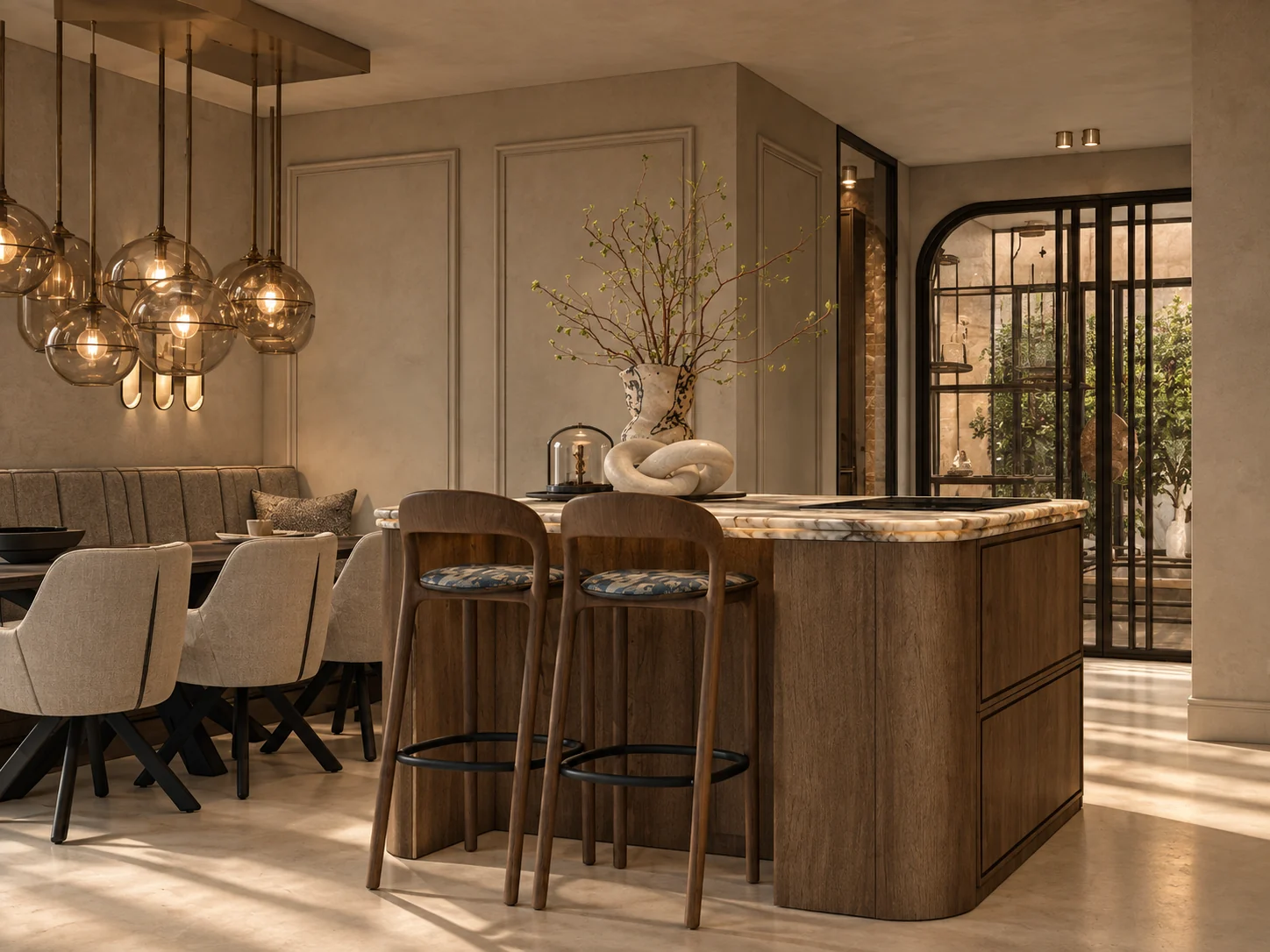
The deed is signed, the keys are on the table. And then you are standing in a home that looked beautiful in the photos but does not yet feel like yours. Harsh ceiling lights, hard floors, an echo in the living room. Sound familiar? You are not alone.
In short
- A Spanish home often calls for a different approach than one in Northern Europe: different light, different floors, different standard finishes.
- Five things make the difference: layout, material and acoustics, light, bespoke joinery and styling.
- With a new build, you can start on your interior before completion.
- AnaCosta works on this with interior designer Nikki Holla of Studio Twentyfour.
Why a home in Spain feels different
If you live in Northern Europe, you are used to large windows, wooden floors, curtains and soft lighting at table height. In Spanish homes on the coast the starting points are often different, and for good reason: above all, the home has to stay cool.
- Light. Outside the light is bright; inside it is often deliberately subdued by roller shutters (persianas) and overhangs. Artificial light usually comes from a single ceiling point per room.
- Floors. Tiles and natural stone are practical and cool, but hard. Without textiles, a room soon sounds hollow.
- Finishes. With new builds, the finishes are set out in the memoria de calidades: kitchen, sanitaryware and floors are often neat, but chosen to suit everyone.
- Storage. Built-in wardrobes are common, but they are not always arranged for how you will use the home.
None of this is a flaw. It is a starting point. The question is how to turn a good Spanish home into a place that feels as if it has always been yours.

Five things that make the difference
1. Layout and routing
In Spain, much of life happens outdoors. How do you get from the kitchen to the terrace? Where does the dining table go when it is still warm after sunset? A good layout starts with how you spend your day, not with where the sockets are.
2. Material and acoustics
Natural materials such as wood, plaster, linen and wool bring warmth to a cool tiled floor. A large rug, curtains and upholstered furniture also dampen the echo. That may be the quickest noticeable difference between ‘a house’ and ‘home’.
3. Light for day and evening
During the day you want to soften the bright light; in the evening, you want atmosphere. A lighting plan with wall lights, indirect light in niches and cabinets and dimmable points makes more difference than any piece of furniture.
4. Bespoke joinery and storage
A built-in wall unit, a bench in the entrance or a niche for towels in the bathroom: bespoke joinery makes a room calm, because everything has its own place. In a holiday home, where guests also stay, that is worth its weight in gold.
5. Styling
The final layer is furniture, art, ceramics and plants. That is also the layer that says most about you. A good design leaves room for it, and includes furniture you already own in the plan.

New builds: start before completion
If you buy new-build property in Spain, you often wait months or years for the keys. That time does not have to stand still. Based on the floor plan, the interior can already be worked out: the furniture plan, the lighting, the materials. So you do not start from scratch at completion, and you will not spend your first week in Spain in a furniture store.
Whether finishing choices are still possible during construction, such as a different floor or extra sockets, differs per developer and build phase. We find that out for you before you sign.

Furnishing remotely: how does it work?
You live in the UK, the Netherlands or elsewhere, and the home is in Spain. For homes abroad, Studio Twentyfour works in three steps: a personal introduction about the property, your wishes and your budget; a design phase with materials, routing, lighting plan and atmosphere, presented in person; and guidance of the realisation, remotely and on location, with a network of specialised partners.
AnaCosta is the local link from our office in San Pedro del Pinatar. We know the property, the developer or seller, and the situation on site.
Second home or rental?
That affects the choices. If you mainly use the home yourself, the interior can be personal. If you (also) let it, maintenance, washable fabrics and an atmosphere that appeals to many guests weigh more heavily. A good design takes that into account from the start. Want to know first what rental could yield? Have a look at the Investment Check.
In Nikki’s words
Personal in feeling. Clear in direction.
The result is not an interior that only impresses in pictures, but a home of which the residents say: this suits us, we could never have come up with this ourselves, and here we feel at home.
Nikki Holla, interior designer · Studio Twentyfour

AnaCosta × Studio Twentyfour
Discover what is possible for your home
Have you bought a property, or are you about to? Tell us how you want to live in it. We will put you in touch with Nikki and keep the lines short.
Frequently asked questions
When is the best time to start on the interior?
Do I have to travel to Spain for this?
What does interior design cost?
Can my own furniture be included in the design?
Further reading
The images in this article are design visualisations by Studio Twentyfour and serve as an example of a design style; they are not completed projects in Spain and not properties from the AnaCosta portfolio. This article is general information; no rights can be derived from its content.