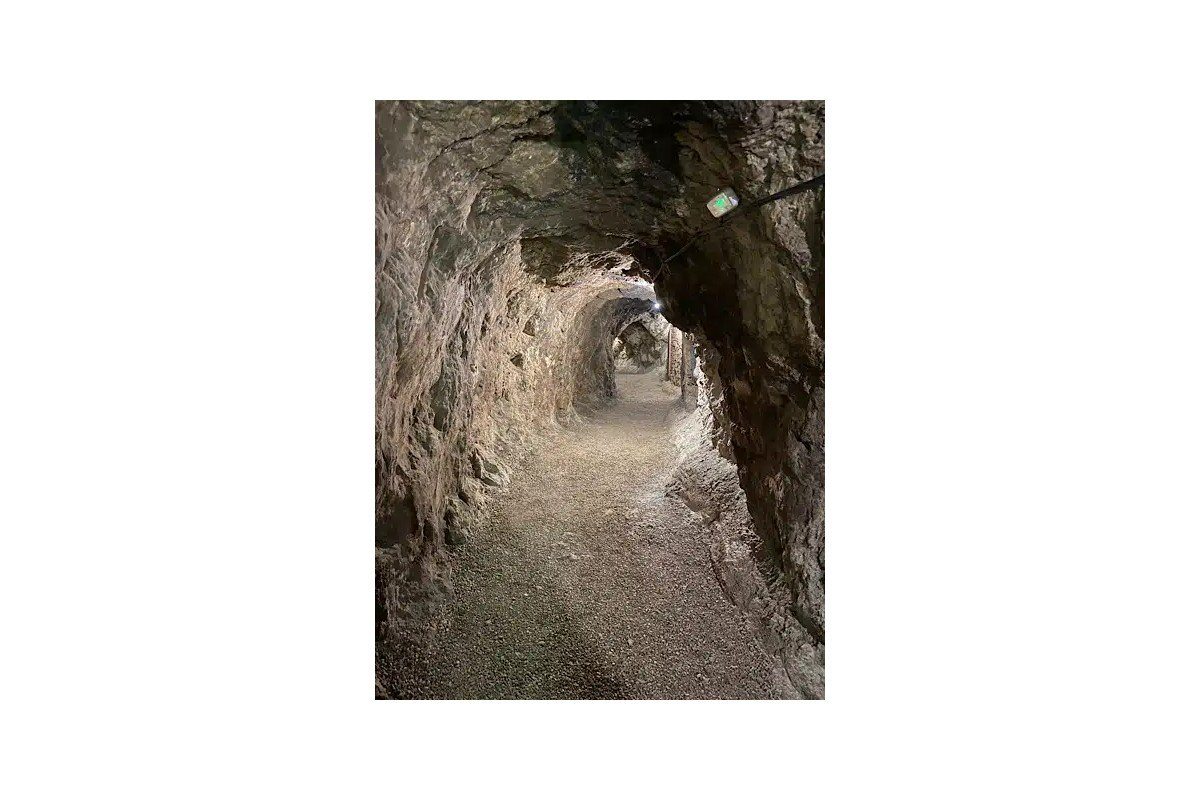
Fifty metres underground, three kilometres from the beach, lies a cavity where crystals two metres long stand glittering. Almost transparent, formed over millions of years. It is the largest geode in the world that you can actually walk into — and it sits in Pulpí, on the Costa Almería. Most international buyers looking for a home in Spain have never heard of it. In fact, that goes for this entire coast. And that is exactly why it is so interesting.
The coast everyone skips
Between the busy Costa Blanca and the famous Costa del Sol lies a stretch of coastline that hardly anyone looks at: the Costa Almería, the easternmost part of Andalusia. No high-rise promenades, no English pubs every fifty metres. Instead: the sunniest and driest province in Europe, kilometres of unspoilt coastline, and villages where Spain still feels genuinely Spanish.
For buyers, that means two things. First: generally the lowest property prices of the three coasts in our region — you simply get more for your money here. Second, and let's be honest: fewer amenities within walking distance, and fewer direct flights outside the season. This coast is not for everyone. But for those seeking peace and space, there is no better place in our entire working area.
In this guide we take you along everything there is to see and do — and tell you where it is truly worth your while.
The Costa Almería in numbers
The best-kept secret of south-east Spain
The Geoda de Pulpí: a cathedral of crystal ⭐⭐⭐⭐⭐
Let's start with the showpiece. In December 1999, a group of mineralogists from Madrid, exploring an old iron and lead mine near the hamlet of Pilar de Jaravía, stumbled upon something they could hardly believe: a crystal-lined cavity some eight metres long, with selenite crystals protruding up to two metres from the walls — clear as glass.
There is one larger geode, at Naica in Mexico. But that one is filled with water at 58 degrees and is life-threatening without special equipment. The Geoda de Pulpí is therefore the largest geode in the world you can walk into. The Mina Rica has been open to the public since 5 August 2019, in 2022 the site was declared a Natural Monument of Andalusia, and since March 2025 the geode has been on UNESCO's tentative list for World Heritage status.
The story behind it is just as remarkable. Around six million years ago, this area was seabed. Then came the Messinian salinity crisis: the Strait of Gibraltar closed and the Mediterranean almost completely evaporated. In the cracks of the remaining rock, calcium sulphate then crystallised over millions of years — slowly enough to grow into what stands there today.
Practical: visits are by guided tour and reservation only, via geodapulpi.com. Allow about an hour. Two warnings: the staircase down is narrow and steep, and the crystals must absolutely not be touched — a single fingerprint causes permanent damage. Book well ahead in high season.
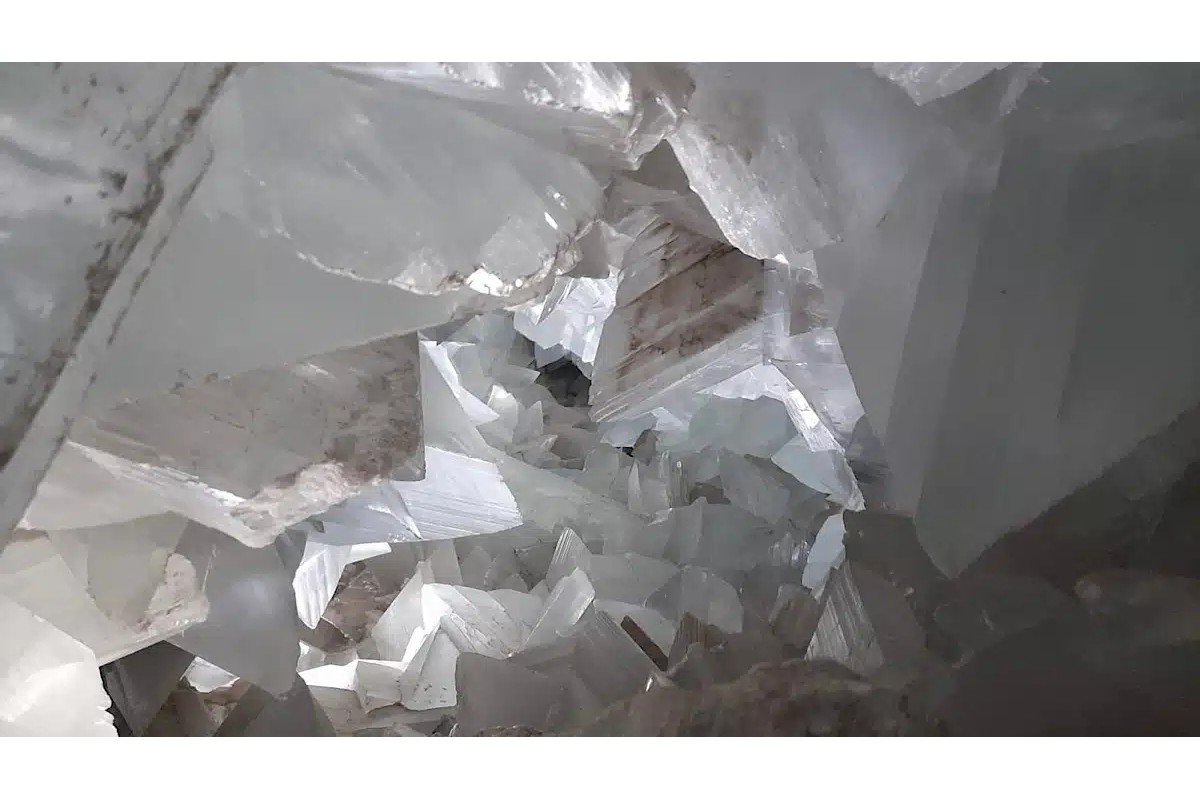
Some wonders of the world drown in tourists. This one sits ten minutes from the beach, and most people don't know it exists.
Mojácar: the white village on the rock ⭐⭐⭐⭐⭐
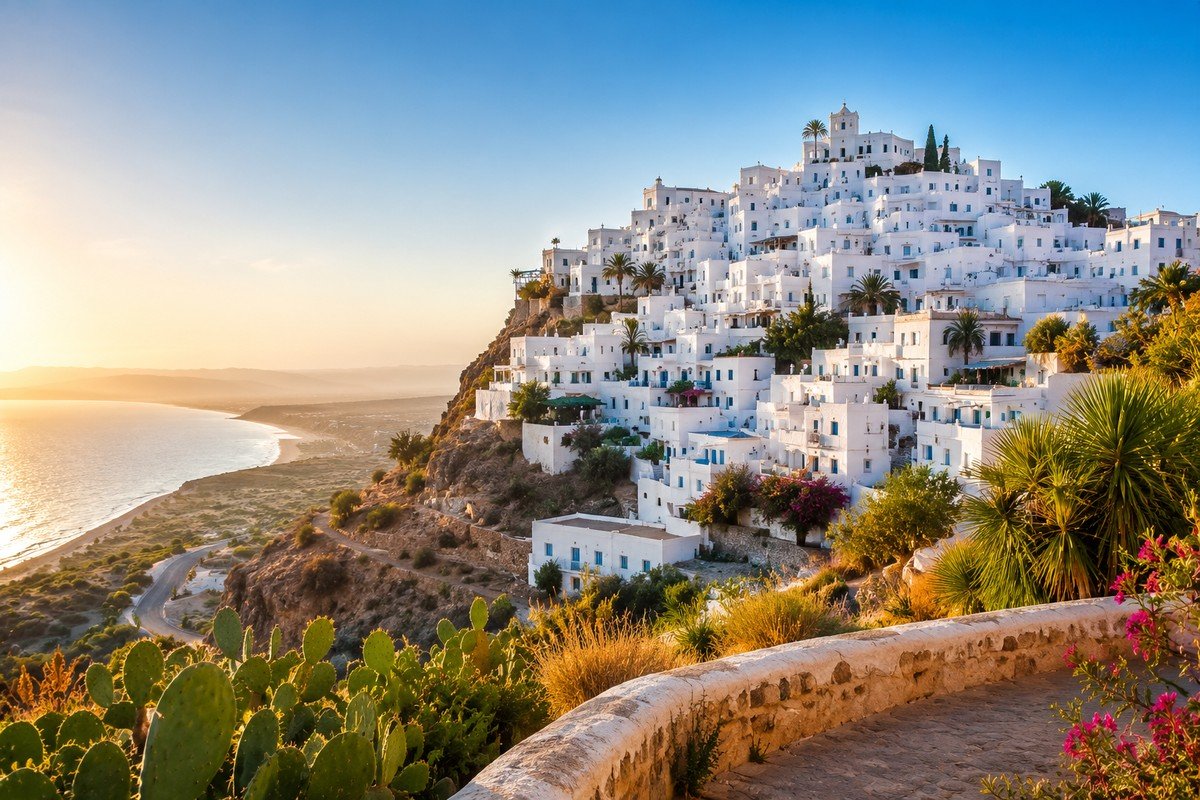
If the geode is the geological showpiece, then Mojácar is the visual one. The village climbs a rocky outcrop like a pile of sugar cubes, wedged between the Sierra Cabrera and the Mediterranean, and rightly features on the list of Los Pueblos más Bonitos de España — Spain's most beautiful villages.
The old centre is compact and easy to explore on foot: whitewashed alleys, flower boxes, and a new view around every corner. Below lies Mojácar Playa, with seventeen kilometres of coastline including seven kilometres of golden sandy beach. Popular with the Spanish themselves — always a good sign.
Garrucha, Vera and Águilas: everyday life ⭐⭐⭐⭐☆
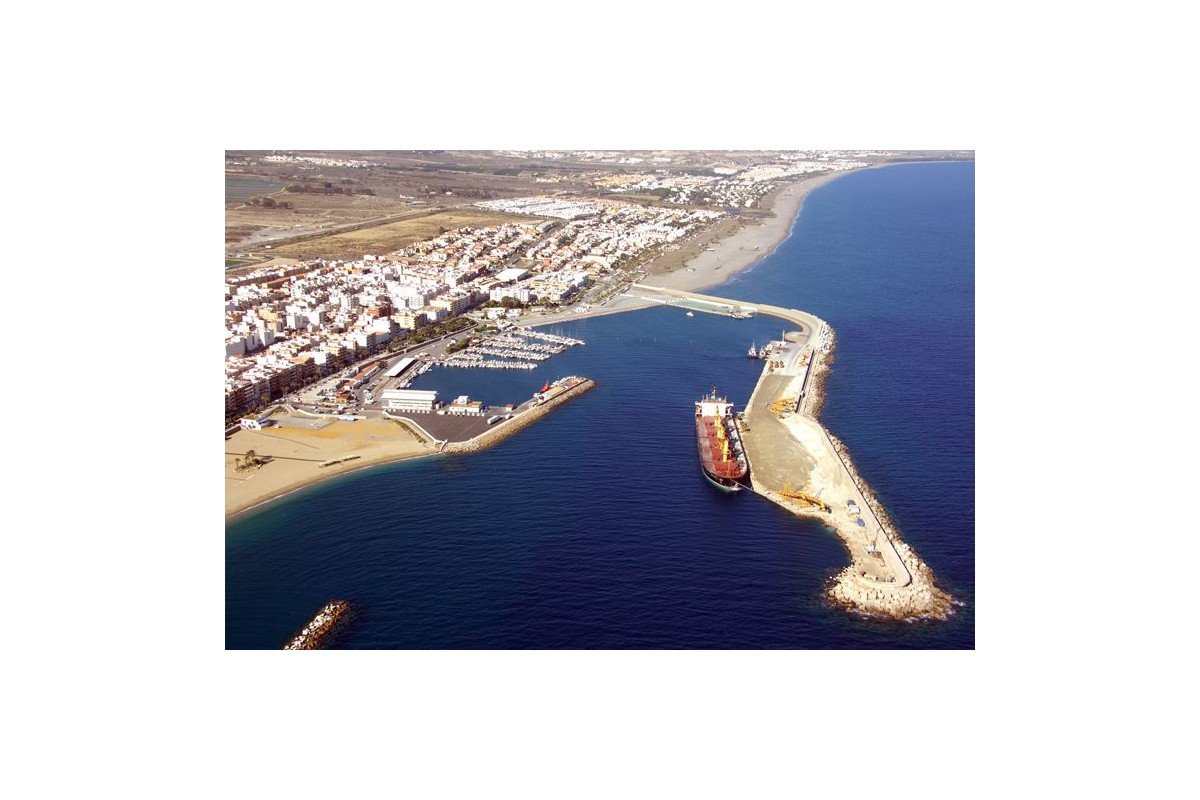
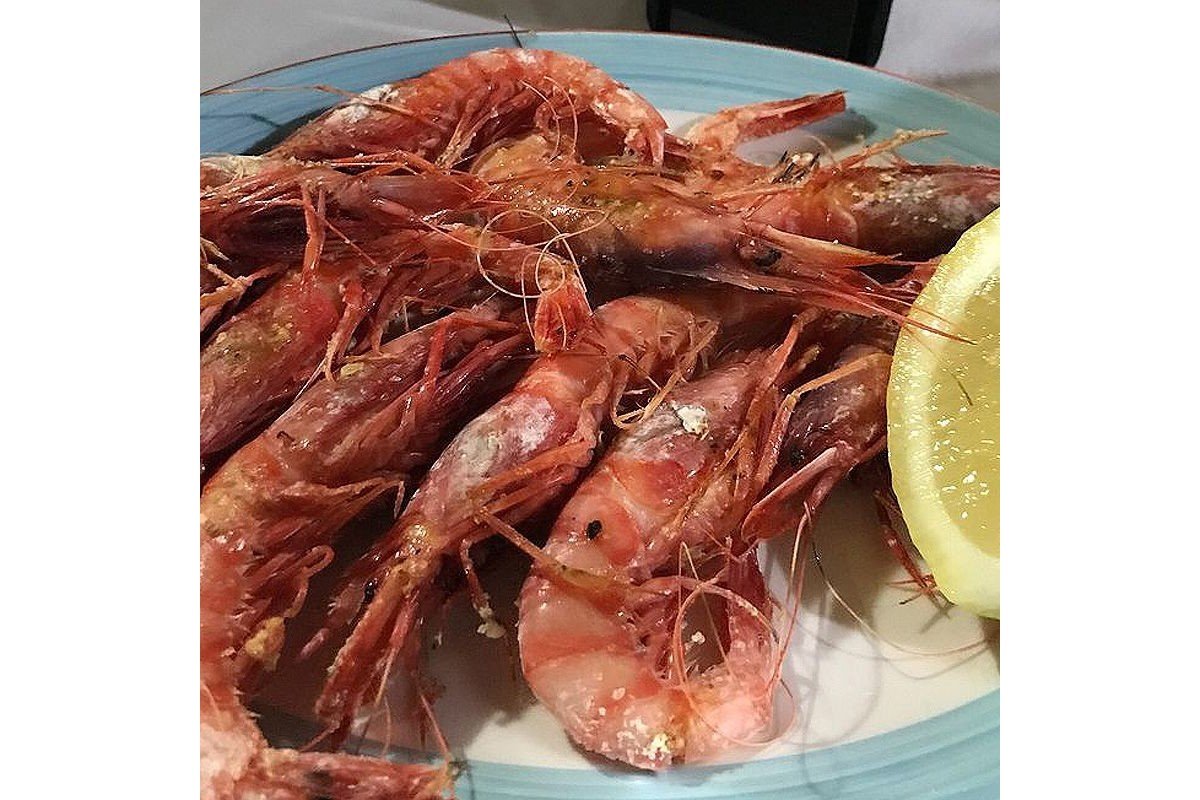
Garrucha is a working fishing port with a lively promenade — and famous for one thing: its red prawns. The gamba roja de Garrucha is considered one of the finest prawns in Spain and is auctioned at the fish market. Have dinner by the harbour one evening and you'll understand why.
Vera is the Renaissance town of the hinterland: small, walled and well-kept, with a pleasant centre and surprisingly complete amenities. For families, AquaVera is a godsend — the largest water park in the region. Vera Playa is also known for its naturist zone, one of the largest in Spain.
Águilas lies just across the border in Murcia, fifteen minutes away: an atmospheric seaside town with coves, a castle and one of Spain's most famous carnivals.
For day trips: desert, caves and nature park
Living here puts landscapes within ninety minutes' reach that you will find nowhere else in Europe.
The Tabernas Desert is Europe's only true desert — and the reason Sergio Leone filmed his Dollars trilogy here in the sixties. The film sets are still standing, and you can visit them.
Karst en Yesos de Sorbas holds Europe's largest gypsum karst formation: an underground labyrinth of caves that can be visited with a guide. A remarkable coincidence: like the geode, this rock was created by that same evaporating seawater.
Cabo de Gata-Níjar is Andalusia's first land-and-sea nature park and perhaps the most beautiful unspoilt coastline in Spain: volcanic rocks, hidden coves and beaches without a single building. Allow a good hour's drive — but it is worth every minute.
And then there is Almería city: the least touristy provincial capital of Andalusia, with the imposing Moorish Alcazaba and a cathedral dating from 1524. Raw, real and without the queues.
Driving times from the coast at San Juan de los Terreros
Indicative driving times, measured outside the high season:
| Destination | Drive | What for |
|---|---|---|
| Geoda de Pulpí | ±10 min | The world's largest walk-in geode |
| Águilas | ±15 min | Seaside town, coves, carnival |
| Vera / AquaVera | ±25 min | Amenities, water park |
| Garrucha | ±35 min | Fishing port, red prawns |
| Mojácar | ±40 min | White hilltop village, beaches |
| Sorbas | ±50 min | Karst caves |
| Tabernas Desert | ±1 hr | Western film sets, desert landscape |
| Cabo de Gata-Níjar | ±1h15 | Nature park, unspoilt coves |
| Almería city | ±1h15 | Alcazaba, cathedral, tapas |
And living here? Take a look at San Juan de los Terreros
Anyone who discovers this coast sooner or later ends up at San Juan de los Terreros — the first coastal village beyond the border with Murcia, in the municipality of Pulpí. Beautiful coves, a quiet beach character and a growing international community, without coming anywhere near the bustle further along the coast.
Right on the coast here lies a large-scale, phased new-build project by a renowned Spanish developer: a complete pueblo mediterráneo with its own supermarket, restaurants and sports centre, heated pools, jacuzzis and playgrounds — with the beaches of Los Nardos and La Entrevista literally on the doorstep. Two golf courses, Aguilón Golf and Desert Springs, are a few kilometres away. There are apartments, duplexes and terraced villas, with the option of a fully furnished handover.
We have now fully assessed and approved this project as Selection #008. View the complete Approved Report — with the AnaCosta Compass, photos, video tour and all pros and points of attention — on the page New-Build Bungalow Mar de Pulpi (Selection #008): modern bungalows ±250 metres from the beach, from € 182,000, completion 2026.
Full transparency: with new-builds we are paid by the developer, which makes our guidance free of charge for you. That changes nothing about our role. We compare this project just as critically against the rest of the market as any other property — and if it doesn't suit you, we will simply say so. Read here how our buyer's guidance on the Costa Almería works.
What to watch out for in Andalusia
One thing many buyers overlook: the Costa Almería lies in a different autonomous region from the Costa Cálida (Murcia) and the Costa Blanca (Valencia). That means different transfer tax on resale properties, different rental rules — holiday letting here requires a VUT registration — and different regional procedures. With older rural properties, checking the legal status is especially important.
Can't come and view in person? With CasaScout we visit the property and its surroundings on your behalf, with honest footage of the neighbourhood. Because as you have read in this guide: on this coast, what lies around the property matters just as much.
Frequently asked questions
What is the Geoda de Pulpí?
Can you visit the Geoda de Pulpí without booking?
Is the Costa Almería cheaper than the Costa Blanca?
What is there to do around San Juan de los Terreros?
How do I get to the Costa Almería from abroad?
Curious about the Costa Almería?
We have known this coast since childhood and work from our office in San Pedro del Pinatar — an hour's drive away. Whether the Costa Almería suits you or not: we will tell you honestly, because we don't sell homes. We help you buy the right one.