
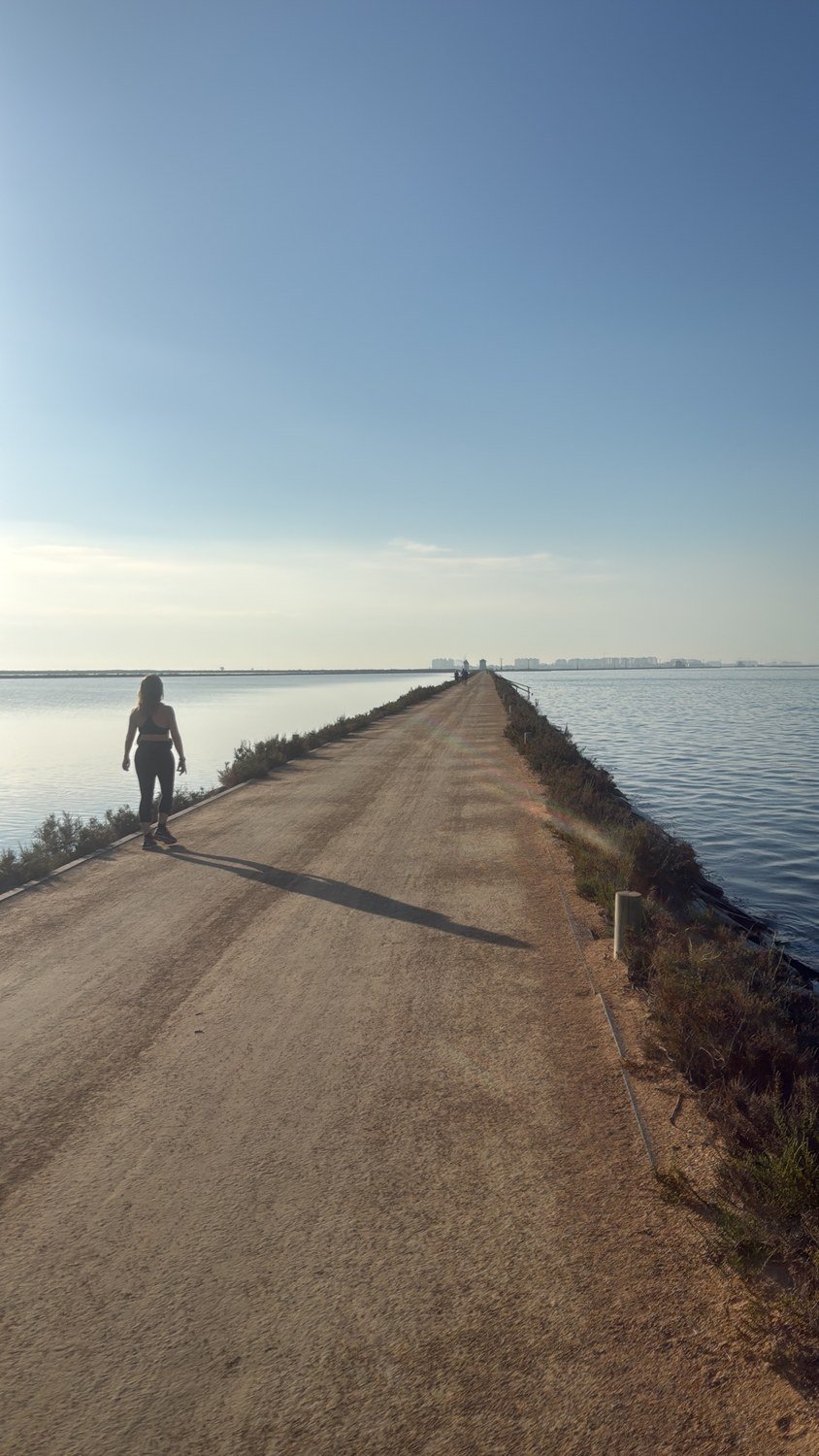
One of my favourite ways to start the day is a walk through Las Salinas. In the early morning in particular, a remarkable calm settles over the nature reserve: the sun rises slowly, the flamingos search for food and the water reflects the first rays of light. No two mornings are the same — and within a couple of hours you will have seen two completely different worlds.
What is Las Salinas de San Pedro del Pinatar?
The Parque Regional Salinas y Arenales de San Pedro del Pinatar is a protected nature park of 856 hectares, set on a narrow strip of land between the calm Mar Menor lagoon and the open Mediterranean. Within that modest area, six different ecosystems come together: salt lakes, dunes, beaches, pine woods, reed beds and salt marshes.
The area is remarkable not only for its scenery, but also for its ecological importance. It is recognised as a Ramsar wetland, forms part of the European Natura 2000 network and is designated a Special Protection Area for birds (ZEPA). For birdwatchers, walkers and photographers it is one of the finest spots in the whole Murcia region.
Las Salinas in numbers
A protected nature park within walking distance of San Pedro del Pinatar
Our favourite morning walk
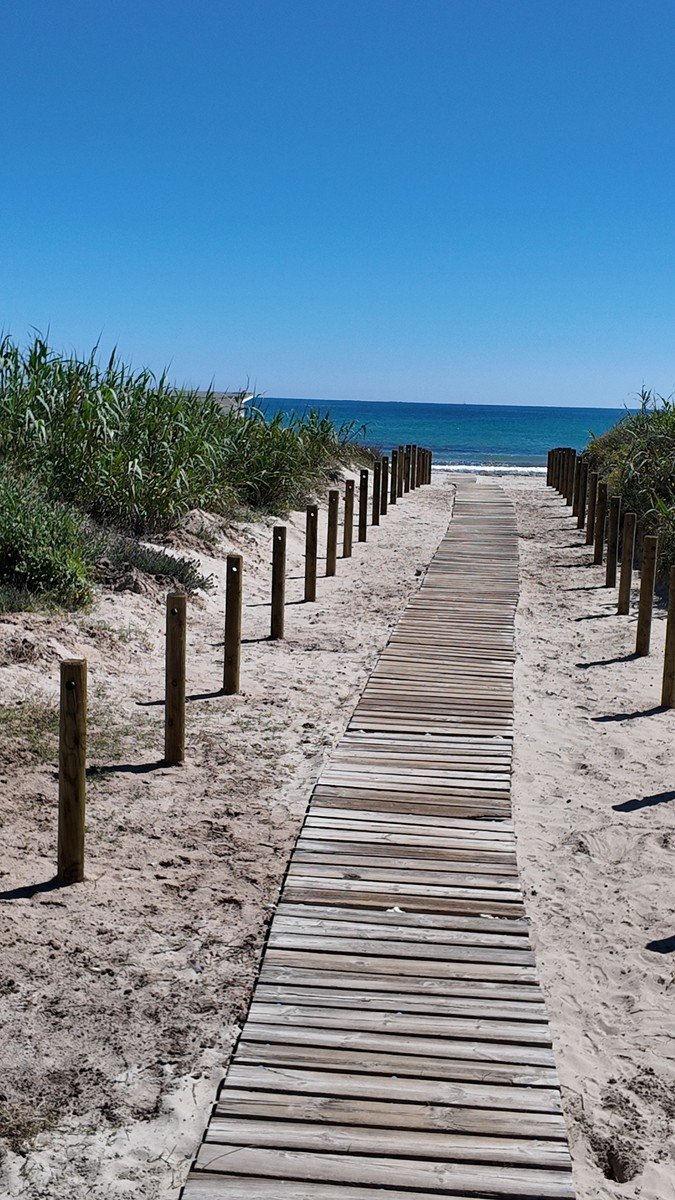
From Lo Pagán I first follow the promenade, with the still waters of the Mar Menor alongside me. At the end of the lagoon I cross over to the open-sea side, where the broad sandy beaches of the Mediterranean begin. From there I follow the coast north towards Torre de la Horadada, with views over the sea, quiet beaches and dunes that reach more than three metres in height at Playa de la Torre Derribada.
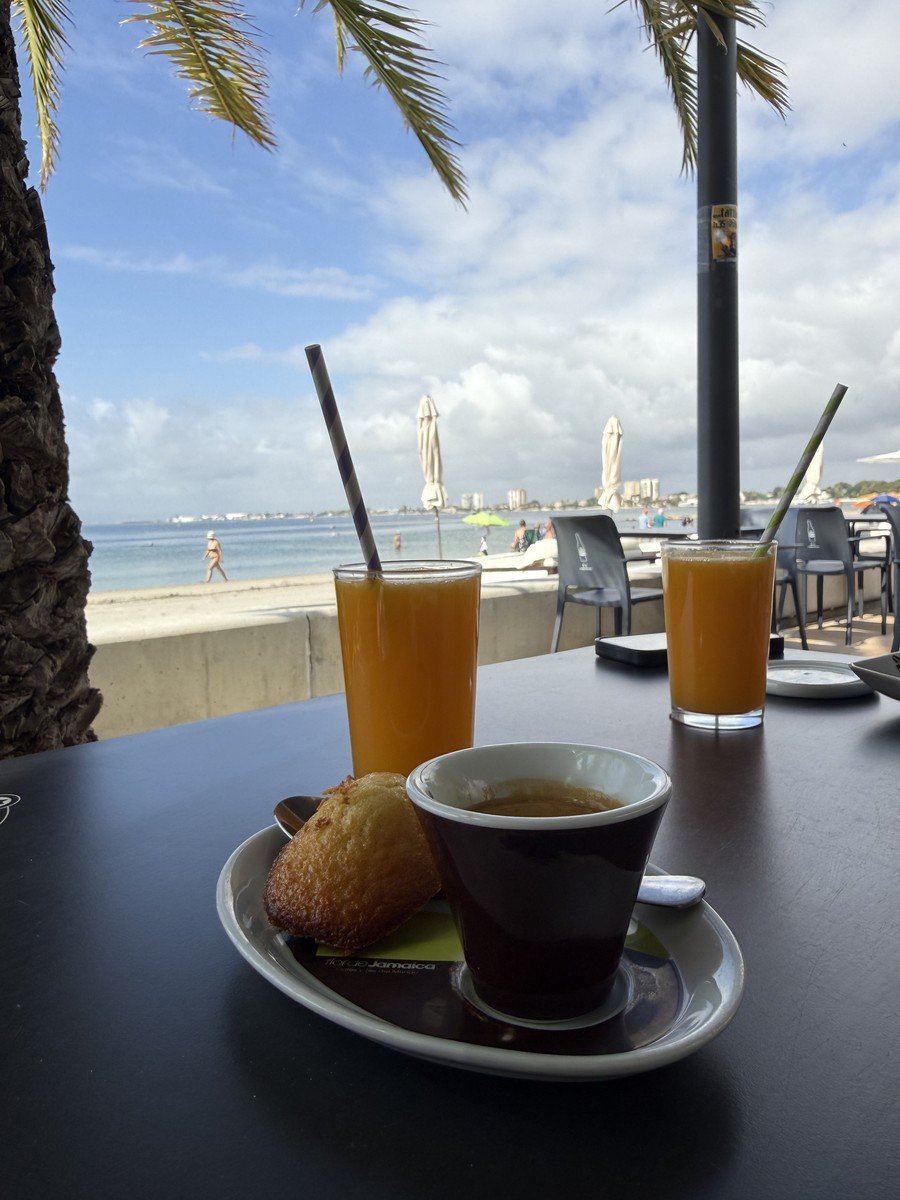
Once there, it is time for a good cup of coffee or a proper Spanish breakfast at one of the welcoming beach bars along the promenade. Sitting for a while, looking out over the water and preparing for the way back — for me that is very much part of the ritual.
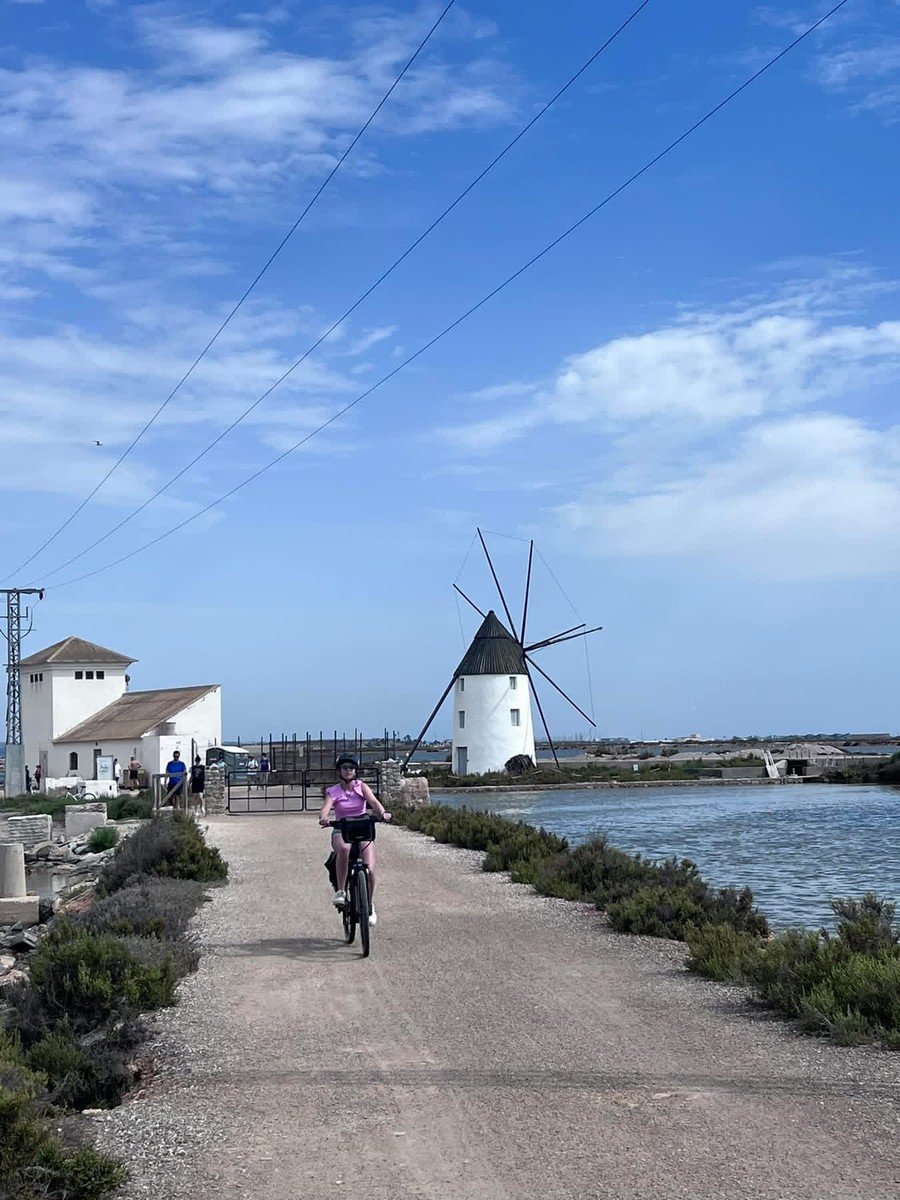
Then comes what may well be the finest part of the route. Following the wooden boardwalks, I walk straight through Las Salinas back towards San Pedro. Along the way I pass the historic windmills and the salt lakes, and I am often lucky enough to see flamingos, herons and other remarkable birds at close range.
First the lively coast, then the stillness of the nature park. Every time it feels as though you discover two completely different worlds in a single walk.
Route options
Depending on how much time you have, there are several options. All the routes are flat and easy going, on foot or by bike.
| Route | Distance | Highlights |
|---|---|---|
| Short route | ± 4 km | Boardwalks, flamingo viewpoint, windmill |
| Medium route | ± 8 km | Las Salinas, Playa de la Torre Derribada, windmills |
| Favourite AnaCosta route ⭐ | ± 16 km | Camino Quintín, San Pedro beach, marina, La Llana, Torre Derribada, breakfast stop, back through Las Salinas |
The favourite AnaCosta route: gold marks the outbound leg along the coast, dashed navy the return through the nature park. Click any point for more information.
The GPX file opens in Komoot, Wikiloc, Garmin or the walking app of your choice.
The windmills and the salt: a working salt pan since Roman times
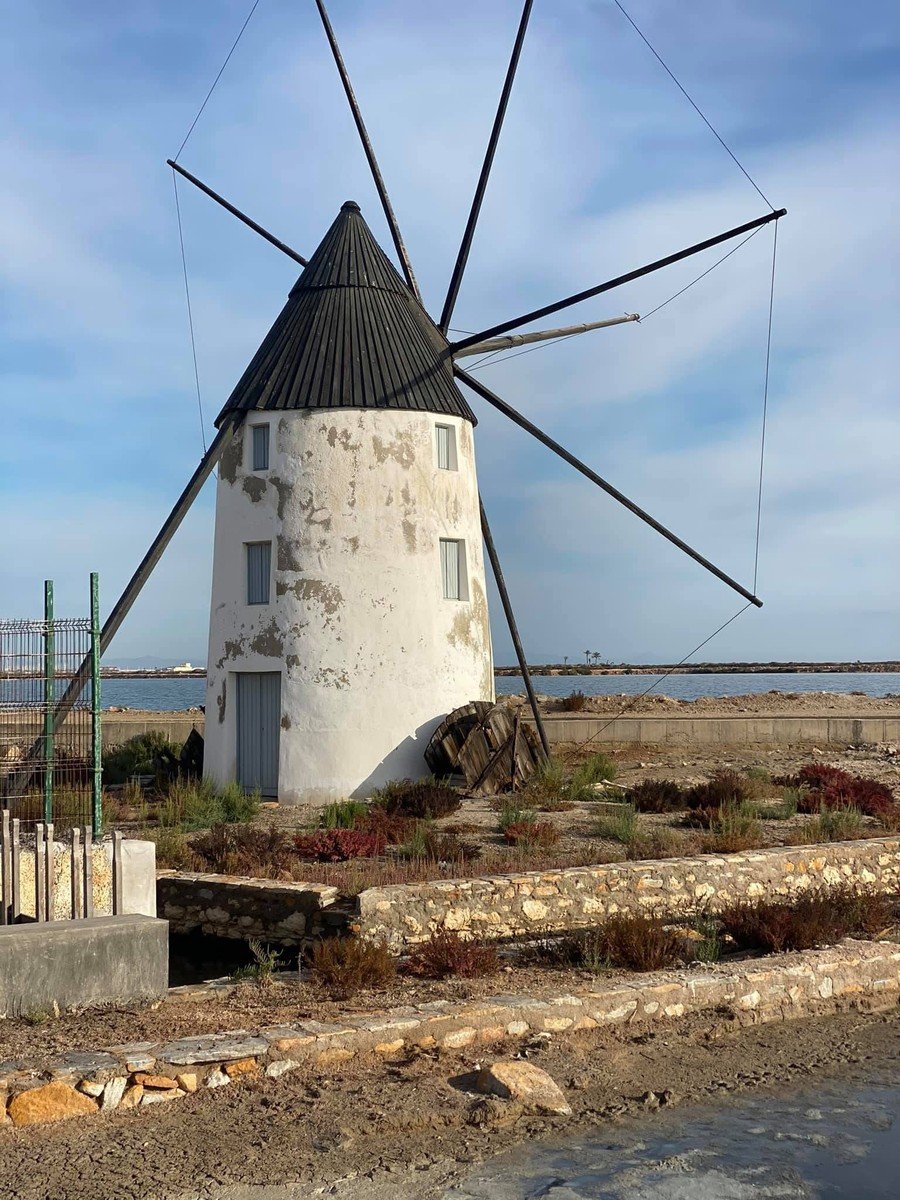
What surprises many visitors is that Las Salinas is not a museum but a working salt pan. Sea salt has been harvested here since Roman times, and it still is today, on an industrial scale. Seawater flows through shallow basins, evaporates in the sun and leaves pure crystals behind. The historic windmills — the Molino de Quintín and the Molino de la Calcetera — define the skyline; they once pumped the water between the basins.
The result of the harvest is visible on the horizon: the characteristic white salt mountains (the montañas de sal) that mark the landscape. During the summer months, trucks and loaders come and go to scoop up and transport the harvested salt — a surprisingly photogenic sight against the deep blue sky.

It is precisely this combination — ancient craft, living nature and protected landscape — that makes the area so special.
A paradise for bird lovers
The park is home to more than 130 bird species across the year. The pink flamingos are by far the most spectacular; the largest groups are usually seen in late June, though they are easy to spot in spring and autumn too. Alongside them you will find little egrets, cormorants, avocets, terns and several species of grebe. From the bird hides along the paths you can watch them calmly and at close range.
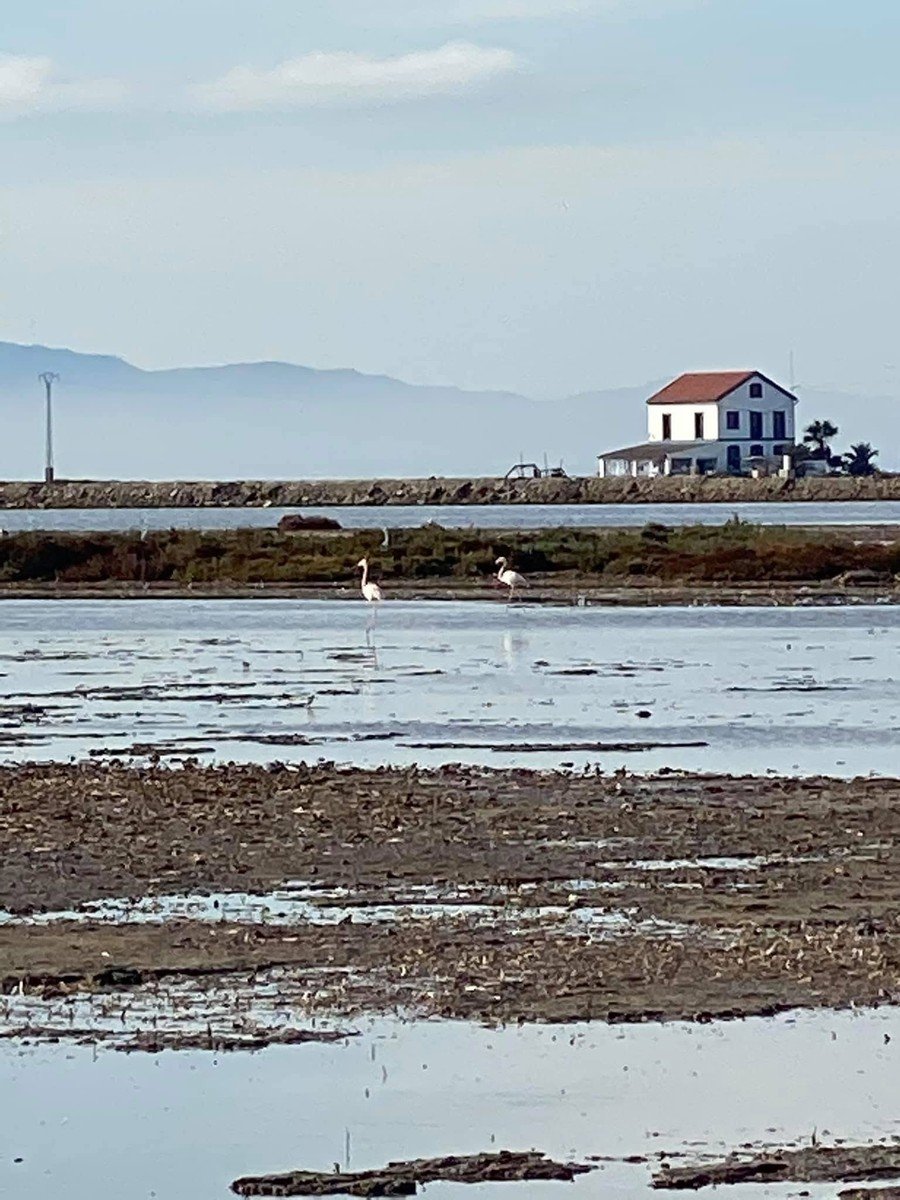
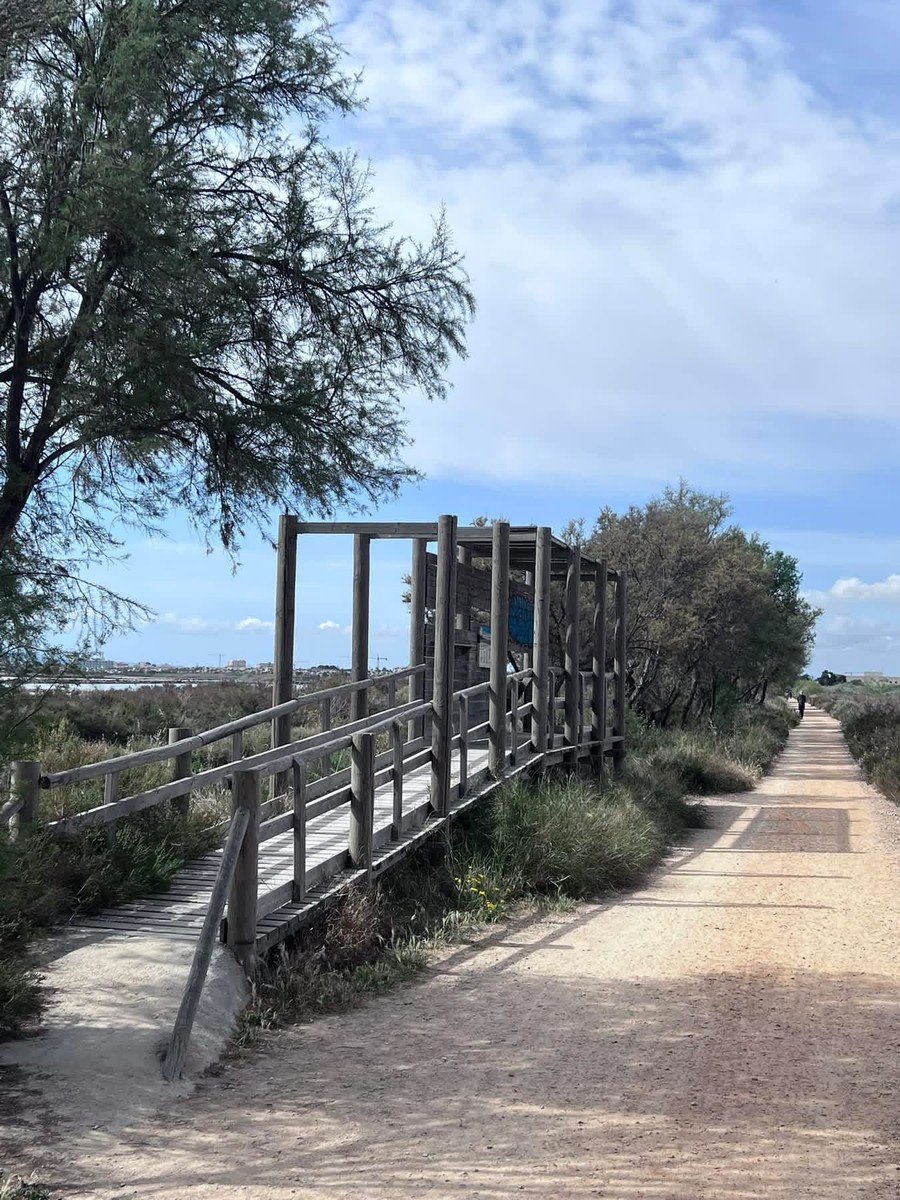
Bring binoculars and keep a respectful distance: this is a protected nature reserve and the birds are sensitive to disturbance. Always stay on the marked paths and do not walk on the dykes (the motas), as the birds nest there.
Practical tips for your visit
A visit takes little preparation, but these few points will make it considerably more enjoyable:
| What to bring | Why |
|---|---|
| Binoculars | For the flamingos and other birds from the hides |
| Water & sun protection | There is little shade on the open causeway paths |
| Good walking shoes | The paths are flat but dusty and uneven in places |
| Camera | For the windmills, salt mountains and morning light |
| Bicycle (optional) | The flat routes are ideal for cycling |
AnaCosta Tip
Go early in the morning. It is quiet, the light is beautiful for photographs and the flamingos are at their most active. Start at the Lo Pagán promenade, combine the walk with breakfast by the water and return through the nature park — that way you see both the coast and the salt flats in a single route.
New: more nature facilities on Avenida del Puerto
The municipality of San Pedro del Pinatar is investing more than €143,800 in new tourist and ecological infrastructure on the Avenida del Puerto, aimed at bird observation and landscape interpretation beside the Regional Park. The project forms part of the Sustainable Tourism Plan (PSTD), funded through the EU Next Generation programme. For visitors, it means even more opportunities to experience migratory birds at close range in the years ahead.
Why Las Salinas is worth a visit
✔ Free to enter
✔ Flat routes, on foot or by bike
✔ Flamingos and 130+ bird species
✔ Historic windmills and salt mountains
✔ Broad sandy beaches on the Mediterranean
✔ Right beside the warm, calm Mar Menor
✔ Lively promenade with terraces in Lo Pagán
In conclusion
Las Salinas de San Pedro del Pinatar is without doubt one of the most beautiful places on the Costa Cálida. The contrast is what makes it unique: the lively coast and promenade on one side, the stillness, the windmills and the flamingos of the nature park on the other. For me, this walk also says a great deal about what it is like to live here — nature, sea and amenities all within walking distance.
Looking for a property on the Costa Cálida?
We work from our office in San Pedro del Pinatar — a stone’s throw from Las Salinas. We know every neighbourhood, every street and every season of this coast. And we do not sell properties: we help you buy the right one.
Discover more in the area
Fallen in love with this area?
Many of our clients first came to San Pedro del Pinatar as visitors and now live here. Our office sits right in the middle of this area, so we know this coast from the inside out.
A memorable day by the Mar Menor can be a starting point for exploring life here. Compare Lo Pagán and San Pedro del Pinatar as places to live, then consider the current property listings.
- 📍 Buying a property on the Costa Cálida
- 🏠 Browse our current property listings
- 🔍 CasaScout: we view the property and the neighbourhood for you
- 🧭 Buyer’s agent service: independent, and only in your interest
- Living and buying a home in San Pedro del Pinatar
- Living and buying a home in Lo Pagán
- Explore current properties in San Pedro del Pinatar